
Which NCAA Women’s Lacrosse Changes Apply to Spring 2027
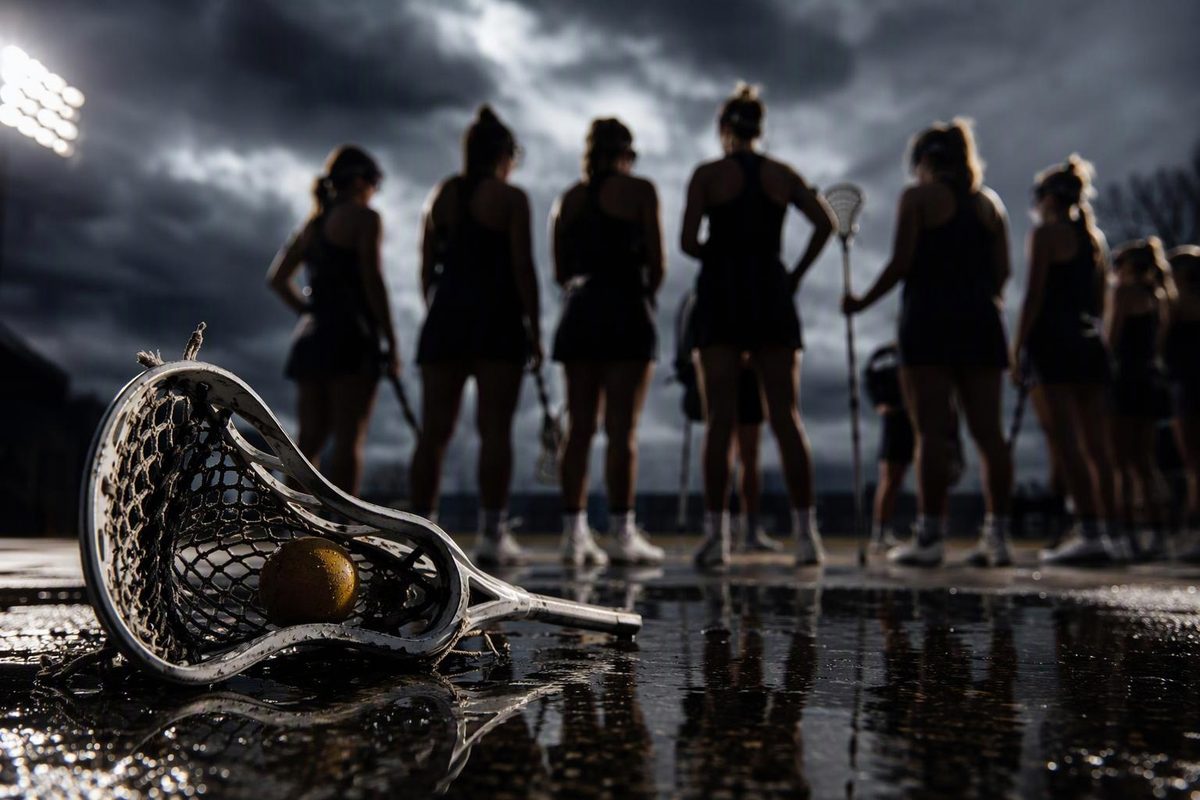
Separate NCAA women’s lacrosse rules approved for 2026–27 from spring 2026 rules and fall experiments, including cards, possession and video review.
The NCAA women’s lacrosse rule changes approved in 2026 take effect for the 2026–27 academic year, including spring 2027, not retroactively for spring 2026. Across Divisions I, II and III, the central changes are two-minute, nonreleasable yellow cards, a new targeting foul, revised video review procedures and power-play possession continuity across period breaks. NCAA approval announcement
Choose the season or experimental setting to see which rule package applies.
Find the Applicable Rules Package
Without JavaScript, all three rule summaries remain visible below.
Spring 2027: New Approved Rules
Use the 2026–27 package for NCAA Divisions I, II and III.
| Provision | Applicable Change |
|---|---|
| Yellow cards | Two minutes, nonreleasable |
| Targeting | New flagrant foul carrying a red card |
| Red cards | Ejection remains; automatic next-game suspension removed |
| Power plays | Possession retained across quarter or overtime breaks |
| Video review | Revised scope and request windows; two-minute completion goal |
The 60-second clock and 10-player lineup are separate fall experiments, not permanent spring rules in this approval.
Spring 2026: Earlier Rules Package
Use the 2025–26 rules, not the changes approved for 2026–27.
| Provision | Rules Context |
|---|---|
| Penalties | Earlier package included changes to one-minute releasable penalties |
| 8-meter free positions | Changes covered by the earlier package |
| Draws | Changes covered by the earlier package |
This summary does not supply the detailed earlier free-position or draw procedures. Consult the 2025–26 approval for that package; do not apply the spring 2027 changes retroactively.
Fall: Experimental Rules Only
Label the game experimental only after confirming which permitted changes it used.
| Experiment | Permitted Change |
|---|---|
| Possession clock | 60 rather than 90 seconds after possession gained from a draw or awarded in lieu of one |
| Lineup | 10 rather than 12 on-field players |
| Restraining line | Six rather than seven players required below the line |
| Attacking possession | Must stay below the restraining line, except for a deflected shot |
A violation of the attacking-possession experiment awards possession to the opponent at the spot of the ball. Permission to experiment does not establish that any particular game used these rules.
Sources: NCAA 2026–27 approvals and fall experiments; NCAA 2025–26 approvals.
The NCAA’s earlier package took effect in 2025–26, including changes to one-minute releasable penalties, 8-meter free positions and draws. Those are separate from the changes approved in 2026. A spring 2026 game belongs to the earlier rules context; a spring 2027 game belongs to the new one. NCAA’s 2025–26 changes
Yellow Cards Become Two-Minute, Nonreleasable Penalties
The approved penalty structure makes every yellow card a two-minute, nonreleasable penalty. It also changes the consequences of a red card and combines flopping and embellishment into one foul.
| Card Or Foul | Approved 2026–27 Consequence |
|---|---|
| Yellow card | Two-minute, nonreleasable penalty |
| Flopping or embellishment | One flagrant foul; yellow card and two-minute, nonreleasable penalty |
| Targeting | New flagrant foul; red card |
| Red card | Ejection remains; automatic next-game suspension is eliminated |
Nonreleasable means a goal does not end the penalty early. A goal scored 40 seconds of playing time into a two-minute yellow-card penalty leaves 80 seconds to serve. The NCAA rules book distinguishes full-time nonreleasable penalties from penalties that can end when the opposing team scores. NCAA rules book, Rule 6-31
The illegal-check rule consolidates stick-contact fouls. It includes uncontrolled or swinging stick contact that strikes an opponent’s stick, hand or body, whether or not that opponent has the ball.
Illegal contact covers unsafe or reckless stick or body contact, as well as contact that pins, restrains or detains an opponent. That includes hooking with the stick’s webbed area.
Targeting is narrower than a general description of hard contact. The NCAA defines it as forcible contact without a legitimate attempt to play the ball, primarily intended to strike or make significant physical contact with a high potential for injury rather than contest possession. The penalty and contact provisions are covered by the NCAA approval announcement and USA Lacrosse’s confirmation.
Power-Play Possession Carries Across Period Breaks
A team on a power play when a quarter or overtime period expires retains possession to begin the next quarter or overtime period. The NCAA describes this as a return to the previous rule; the restart location remains unchanged.
For scoring analysis, the distinction is possession continuity: the period break does not itself interrupt that possession advantage. It does not guarantee a goal or establish how much scoring will change.
The same approval changes stick checks, exchanges and clock administration. Officials must conduct at least one draw-player stick check per quarter, plus a check before each overtime period. Those checks occur immediately before a draw.
Players may exchange sticks with a teammate on the field when not in possession of the ball. Both the game clock and possession clock stop during official warnings, such as nonengagement or misconduct, and during defensive false starts on an 8-meter free position.
Equipment subject to certification or governing-body approval must be commercially available to all schools by January 1 before the applicable spring season. These provisions are included in the NCAA’s approved administrative and possession changes.
Video Review Expands, With Defined Request Windows
Video review requests are limited to coaches. Officials must notify both teams’ coaches when a request is made and must strive to finish the review within two minutes. That is a completion goal, not an absolute cutoff.
Review can identify or confirm the correct offender whenever a yellow or red card is administered. Previously, that provision applied only to cards resulting in ejection. Potential flopping fouls also become reviewable.
After a goal, an eligible request must arrive before the draw clock expires. During a timeout, it must arrive within the first 30 seconds.
A review initiated solely to correct a timing error cannot be used to identify or penalize other reviewable fouls. The broader review scope therefore does not turn a timing-only review into an unrestricted search for infractions. Approved video review provisions
The 60-Second Possession Clock Is a Fall Experiment
The NCAA separately permits fall experimentation. These provisions are not permanent spring 2027 rules under the approval described here.
| Experimental Provision | Permitted Change |
|---|---|
| Possession clock | 60 seconds instead of 90 after possession gained from a draw or awarded in lieu of one |
| On-field lineup | 10 players instead of 12 |
| Players below the restraining line | Six required instead of seven |
Another experiment requires an attacking team to keep possession below the restraining line, with an exception for a deflected shot. A violation awards possession to the opponent at the spot of the ball. NCAA fall experiments
The clock experiment is limited to the specified possession origins. It should not be described as a universal 60-second clock, nor should permission to experiment be treated as evidence that every fall game used the experimental rules.
Scoring Comparisons Need Separate Rules Labels
For statistical work, distinguish spring 2026 / 2025–26 rules from spring 2027 / 2026–27 rules. Label experimental fall games separately and identify which experimental provisions were actually used.
The new penalty and possession provisions give analysts reasons to examine power-play opportunities, scoring and period-end possessions. They do not, by themselves, prove that scoring will rise. The cited approvals provide no measured scoring effect for the new package.
Compare goals per game alongside schedule length and, where available, possession and power-play data. Keep draw-control totals tied to the number of draws actually contested rather than treating every game as having the same opportunity count.
Goals, assists and points still need consistent definitions across comparisons. Our guide to how lacrosse scoring statistics are counted explains why the code and era belong beside the number.