
D1 Women’s Lacrosse: How to Follow the Championship and Read the Stats
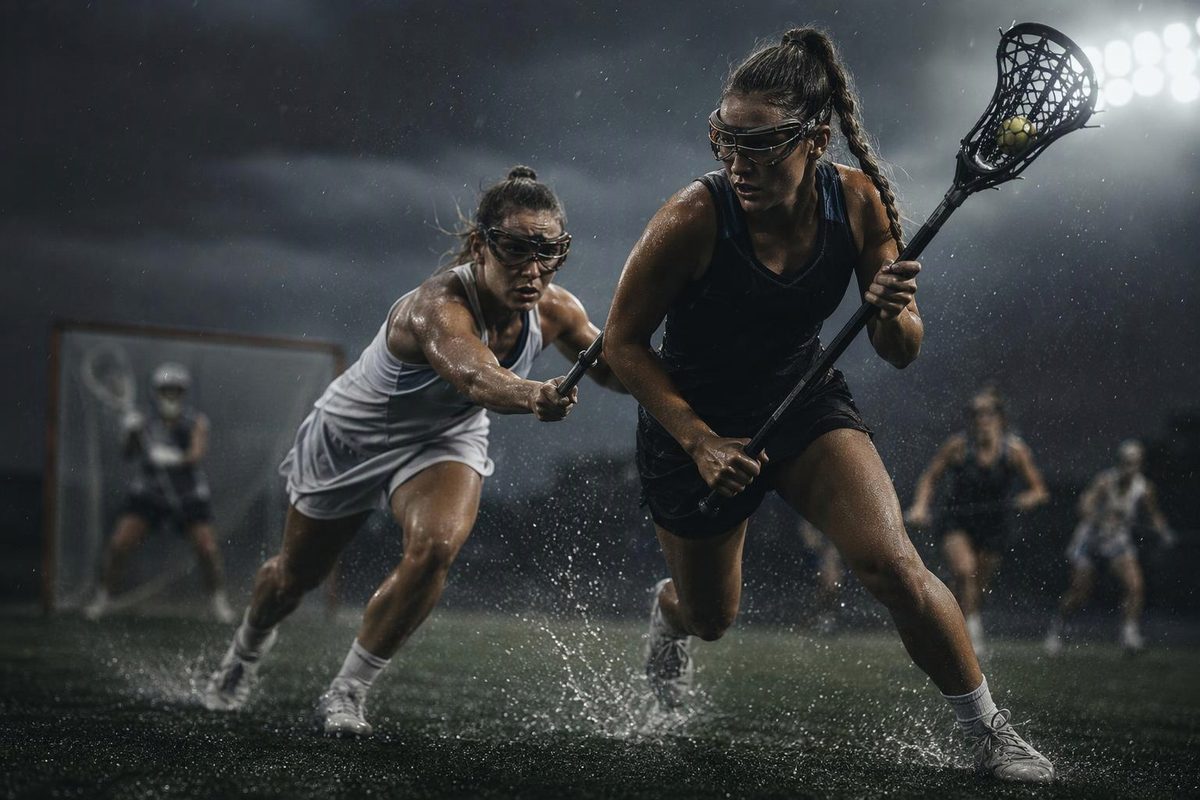
A women-specific Division I guide: the NCAA tournament, 2026 statistical leaders, draw controls, free-position shooting and official record sources.
D1 women’s lacrosse means NCAA Division I women’s field lacrosse, also written DI. The NCAA women’s DI hub provides championship coverage and game highlights; the women’s DI statistics page lists individual and team statistical leaders.
To understand a team or player, look beyond goals. Draw controls show who gains possession from draws; free-position figures isolate a particular shooting opportunity; caused turnovers and goalkeeping statistics describe work that scoring totals miss.
How the NCAA championship works
The 2026 tournament had 29 teams: 15 automatic qualifiers and 14 at-large selections, competing in a single-elimination bracket. Its rounds were the first round, second round, quarterfinals, semifinals and championship game. Higher seeds hosted the quarterfinals before the final four teams played at Northwestern’s Martin Stadium in Evanston, Illinois. Northwestern defeated North Carolina 14–11 on May 24, 2026, winning its ninth NCAA title. (NCAA tournament recap, championship report)
Those are the 2026 field and results, not a guarantee of every future tournament’s allocation. For 2027, the DI semifinals are scheduled for May 28, with the final on May 30, at Johnny Unitas Stadium at Towson in the Baltimore metropolitan area. The DII and DIII finals share the venue on May 29. Preliminary-round scheduling also changes: first- and second-round games move to Thursday and Saturday, with quarterfinals split between Wednesday and Thursday evenings. (NCAA venue announcement, 2027 schedule announcement)
What the 2026 statistical leaders tell you
The NCAA’s women’s DI tables distinguish individual production from team performance. These selected 2026 figures were displayed as of November 4, 2026:
| Category | 2026 leader | Figure | What it measures |
|---|---|---|---|
| Individual goals per game | Chloe Humphrey, North Carolina | 5.19 | Goals divided by player appearances |
| Individual caused turnovers per game | Reagan O’Brien, Johns Hopkins | 4.40 | Credited caused turnovers divided by appearances |
| Team scoring offense | North Carolina | 17.52 | Team goals scored per game |
| Team scoring defense | Denver | 6.90 | Team goals allowed per game; lower is better |
Sources: individual goals, individual caused turnovers, team statistical overview.
Humphrey’s rate comes from 109 goals in 21 games. Her total tied the DI single-season mark established by Northwestern’s Madison Taylor with 109 in 22 games in 2025. Dividing goals by games and rounding to two decimals gives 5.19 for Humphrey and 4.95 for Taylor: the totals tie, but the rates do not. Humphrey reached the tie in the NCAA final, so her figure is not regular-season-only. (NCAA goals table, NCAA DI record book, final report)
A statistical leader is not automatically the national champion or best overall team. North Carolina led scoring offense, but Northwestern won the title. Per-game figures account for appearances, not opponent strength, playing time or possession volume.
Women’s lacrosse box-score categories worth knowing
Draw controls are not individual faceoff wins. Credit goes to the player who gains possession after the draw, who need not be one of the two players taking it. If a teammate collects the ball, that teammate receives the draw control. The same recovery does not also earn a ground ball. (2026 NCAA statisticians’ manual, Section 6)
For team comparisons, consult both draw controls per game and draw-control percentage on the NCAA statistics page. A large count describes volume; the percentage describes the share won.
Free-position goals are part of total goals, not additional scoring. An eight-meter free-position shot also counts toward total shots. Crucially, an awarded free position is not recorded as a free-position shot if the player does not shoot. That distinction matters when interpreting conversion figures. (NCAA manual, Sections 2 and 7)
Caused turnovers require defensive credit. An opponent’s unforced mistake can produce a turnover without anyone receiving a caused turnover. Shots on goal include goals and saved shots, not every attempt toward the cage; merely hitting the pipe does not make an attempt a shot on goal. (NCAA manual, Sections 4, 7 and 9)
Where to check historical records
Use the NCAA women’s statistics and records directory. Under All-Time Records and Results, find Division I and choose either Individual and Team Records or Championship Records. Tournament-only records and full-season records answer different questions.
Official NCAA women’s records begin with 1982. That is the record book’s starting point, not the beginning of women’s college lacrosse. For broader scoring-record comparisons across NCAA divisions and genders, see college lacrosse records.