
Maryland’s First Full-Field WLL Title, Explained Through the Stats
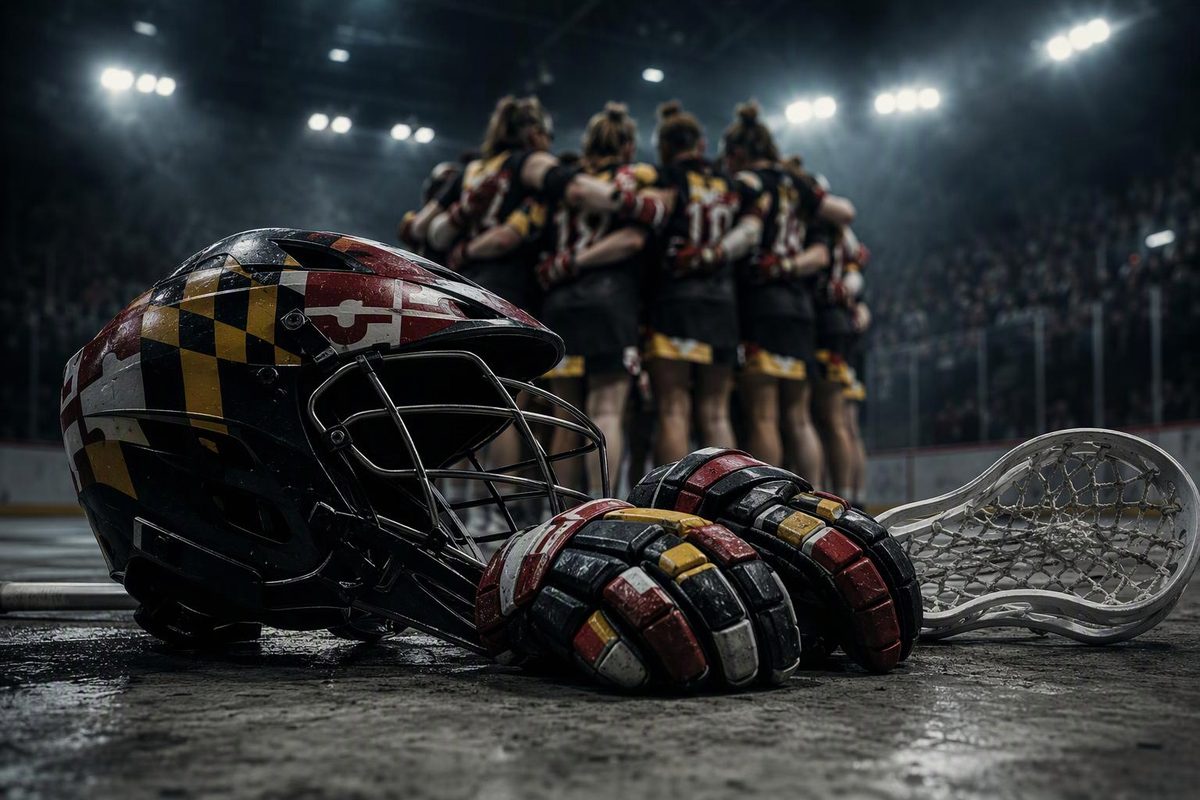
Explore Maryland’s 16–13 WLL championship win, Sydni Black’s five-point MVP performance, 17 goalie saves and the difference between final and season totals.
The Maryland Charm beat the California Palms 16–13 on August 15, 2026, at Subaru Park in Chester, Pennsylvania, to win the inaugural full-season Women’s Lacrosse League championship. Sydni Black earned championship MVP honors, and Maryland’s two goalies combined for 17 saves. The official WLL schedule confirms the date and result; the league’s championship recap confirms Black’s award. These championship statistics belong to the final, not Maryland’s regular-season totals.
Choose the competition below to keep championship, regular-season and Sixes figures separate.
Find the Correct Stat Scope
— means the supplied reports do not provide the figure.
Maryland 16, California 13
Use these for the 2026 championship game only. Black was championship MVP.
| Player / Unit | Statistic | Final |
|---|---|---|
| Sydni Black | Goals / assists | 4 / 1 |
| Sydni Black | Ground balls / caused turnovers | 3 / 4 |
| Cassidy Spilis | Goals / assists | 3 / 1 |
| Brigid Duffy | Goals / assists | 2 / 2 |
| Ashley Humphrey | Assists | 4 |
| Alex Holman | Goals | 3 |
| Livy Rosenzweig | Goals | 1 |
| Livy Rosenzweig | Ground balls / faceoff wins | 6 / 14 |
| Waters / Cuocco | Saves | 8 / 9 |
| Maryland goalies | Combined save % | 56.7% |
| Taylor Moreno | Saves | 15 |
| Anna Brandt | Goals | 4 |
| Mastroianni / LoPinto | Goals | 3 each |
Selected highlights, not a complete box score. Combined save rate: 17 saves ÷ (17 saves + 13 goals allowed), rounded to one decimal place.
Four-Game Regular Season Only
These are not championship-game figures. Complete regular-season lines for the other players listed in the final: —.
| Player | Statistic | Season |
|---|---|---|
| Livy Rosenzweig | Ground balls | 28 |
| Livy Rosenzweig | Faceoff wins | 48 |
| Cassidy Spilis | Goals | 6 |
| Cassidy Spilis | Assists | 1 |
| Cassidy Spilis | Points | 7 |
California scored 17, 17, 16 and 21 in its four regular-season games. Its 13 in the final was below all four.
A Separate Competition
Boston won the inaugural 2025 Championship Series in Olympic Sixes. Maryland competed in the 2025 and 2026 Series before winning the 2026 full-field title.
Do not assign Maryland’s 16–13 full-field final or its player statistics to Sixes.
| Series | Maryland Player Stats |
|---|---|
| 2025 Sixes | — |
| 2026 Sixes | — |
The supplied reports do not provide Maryland’s Sixes player totals.
Sources: WLL schedule and championship recap, USA Lacrosse game report and expansion announcement, Rutgers Athletics; linked in the article.
Maryland Won the First Full-Season Title, Not the First WLL Trophy
“First WLL championship” needs a format label. Maryland won the first championship following the league’s 10-v-10 full-field season. Boston had already won the inaugural 2025 Championship Series, played in Olympic Sixes. Maryland competed in both the 2025 and 2026 Championship Series before winning this full-field final.
The season-expansion announcement and the league’s championship recap distinguish those competitions. Maryland’s result is therefore a first in the full-season championship record, not evidence that the WLL had never previously crowned a winner.
For a record-book entry, use 2026 WLL full-field championship game: Maryland 16, California 13. That label identifies the year, format and stage of competition. Removing “full-field” risks conflating the result with Sixes; removing “championship game” risks treating one-game player figures as season totals.
The same distinction applies when comparing players. A final-game performance can establish what a player contributed to this title without establishing a league season record. The supplied reports document selected championship figures and some regular-season totals, but they do not supply a complete record table across every WLL competition.
Black’s Five Points Led the Championship Highlights
The following figures are from the final alone. They are selected reported statistics, not a complete box score. A player’s absence from a category does not mean that player recorded zero in that category.
| Player or Team | Championship-Game Figures |
|---|---|
| Maryland Charm | 16 goals; led 9–7 at halftime |
| Sydni Black, Maryland | 4 goals, 1 assist, 3 ground balls, 4 caused turnovers; championship MVP |
| Ashley Humphrey, Maryland | 4 assists |
| Cassidy Spilis, Maryland | 3 goals, 1 assist — 4 points |
| Alex Holman, Maryland | 3 goals |
| Brigid Duffy, Maryland | 2 goals, 2 assists — 4 points |
| Livy Rosenzweig, Maryland | 1 goal, 6 ground balls, 14 faceoff wins |
| Caylee Waters, Maryland | 8 saves in the first half |
| Jenika Cuocco, Maryland | 9 saves in the second half |
| Taylor Moreno, California | 15 saves |
| Anna Brandt, California | 4 goals |
| Ally Mastroianni and Emma LoPinto, California | 3 goals each |
USA Lacrosse’s game report supplies the scoring and goalie highlights. The league recap adds Black’s assist and defensive line. Rutgers Athletics supplies Spilis’ assist and Rosenzweig’s final-game totals.
Black’s four goals accounted for 25% of Maryland’s scoring. Adding her assist gives her five individual points. Her line also includes three ground balls and four caused turnovers, so the championship MVP entry captures both scoring and defensive contributions rather than goals alone.
Spilis and Duffy each finished with four points, but reached that total differently. Spilis scored three goals and assisted on one; Duffy scored twice and assisted twice. Equal point totals do not mean identical scoring roles. Humphrey’s four assists are another distinct contribution: they describe her involvement in teammates’ goals, not four additional Maryland goals.
Points credit goals and assists to individual players. They are not additional team goals, and adding player points is not a way to reconstruct the 16–13 score. A goal and the assist attached to it can both appear in individual scoring lines while representing one team goal. See how lacrosse scoring stats are counted for the distinction between team scoring and individual credit.
The reported lines should also stay within their limits. Holman’s three goals are supplied, but an assist total is not. Rosenzweig’s one goal is supplied alongside her possession figures, but a complete scoring line is not. Neither omission supports assigning a zero or calculating an unreported full points total.
Maryland Held California Below Every Regular-Season Output
California’s 13 goals were its lowest total of the 2026 regular season and championship. The Palms’ four regular-season outputs were 17, 17, 16 and 21, according to the official schedule. Maryland held California three goals below its previous low and eight below its immediately preceding game.
| California Scoring Reference | Goals |
|---|---|
| Regular-season outputs, in order | 17, 17, 16, 21 |
| Previous regular-season low | 16 |
| Immediately preceding game | 21 |
| Championship final | 13 |
That comparison describes the Palms’ scoring across this particular full-field regular season and its championship. It does not establish their lowest score across Sixes, another season or every game in franchise history. The format and date range are part of the claim.
The final margin was three goals, but the halftime score alone does not explain how Maryland secured it. The Charm led 9–7 at the break. California then tied the game at 9–9 before Maryland answered with three straight goals and never surrendered the lead again.
USA Lacrosse’s report also describes Cuocco making four consecutive saves while Maryland protected a narrow fourth-quarter advantage. That sequence gives context to her second-half save total: the saves came during a half in which California had already erased Maryland’s halftime lead. The report does not supply enough detail here to assign a numerical value to that stretch beyond the four saves themselves.
California’s reported individual scoring included four goals from Brandt and three each from Mastroianni and LoPinto. Those figures identify major contributions on the losing side, but the selected lines are not the Palms’ complete scoring distribution. The team’s 13-goal total remains the authoritative championship score.
Seventeen Saves Produced a 56.7% Combined Goalie Rate
Waters and Cuocco split the game at halftime. Waters made eight saves in the first half, when California scored seven goals. Cuocco made nine saves in the second half, when California scored six. Together, they finished with 17 saves and 13 goals allowed.
Combined Maryland save percentage is 17 ÷ (17 + 13) × 100 = 56.7%, rounded to one decimal place.
| Maryland Goalie | Saves | Goals Allowed | Calculated Save % |
|---|---|---|---|
| Caylee Waters, first half | 8 | 7 | 53.3% |
| Jenika Cuocco, second half | 9 | 6 | 60.0% |
| Combined, full final | 17 | 13 | 56.7% |
These rates are calculated from the half-by-half saves and scoring documented by USA Lacrosse. They are championship-game rates, not either goalie’s season save percentage. Waters’ line describes the first half; Cuocco’s describes the second; the combined line describes Maryland’s goalkeeping across the whole final.
The combined percentage uses the combined saves and goals allowed. It is not an average of the two displayed individual percentages. Calculating from the underlying totals preserves the correct weighting and avoids making rounded percentages the starting point for another calculation.
The denominator also has a specific meaning: saves plus goals allowed. It should not be relabeled as every California shot attempt. The supplied championship highlights do not provide a complete shot-attempt total, including misses, so they do not support a broader shooting-efficiency calculation.
Moreno made 15 saves for California. That figure belongs in the championship comparison, but it should not be confused with Maryland’s 17: Maryland’s number combines two goalies, while California’s reported number belongs to Moreno individually. Save totals describe recorded stops; on their own, they do not describe every shot’s difficulty or establish which goalie had the better overall performance.
The half-by-half division makes this final unusually easy to summarize without blending player and team lines. Waters supplied the first-half saves, Cuocco supplied the second-half saves, and the team total is their sum. Keeping those labels attached prevents the combined 17 from being mistakenly credited to either Maryland goalie.
Rosenzweig’s Possession Totals Belong to Two Different Scopes
Rosenzweig recorded six ground balls and 14 faceoff wins in the championship. Her 28 ground balls and 48 faceoff wins belong to the four-game regular season. Rutgers reports those scopes separately; the larger figures are not her final-game totals.
Spilis presents the same distinction in scoring. Her championship line was three goals and one assist for four points. Her regular-season line was six goals and one assist for seven points. Both are valid entries, but neither can replace the other when answering a championship-only query.
| Player and Statistic | Championship | Four-Game Regular Season |
|---|---|---|
| Rosenzweig, ground balls | 6 | 28 |
| Rosenzweig, faceoff wins | 14 | 48 |
| Spilis, goals | 3 | 6 |
| Spilis, assists | 1 | 1 |
| Spilis, points | 4 | 7 |
The matching assist figures for Spilis are a useful example of why the label matters even when the number does not change. One assist in the final and one assist across the regular season refer to different sets of games. A reader cannot identify the competition scope from the value alone.
Rosenzweig’s championship faceoff wins should remain a count, not a faceoff percentage. The supplied figures do not state her total faceoff attempts in the final. Without that denominator, 14 wins cannot establish her win rate. The same limit applies to comparing her championship and regular-season efficiency: the win totals are available, but the corresponding attempts are not.
Ground balls and faceoff wins also measure different actions. They can sit beside one another in a possession summary, but adding them would create a new composite rather than a standard reported total. Rosenzweig’s six ground balls, 14 faceoff wins and one goal are most useful as separate championship entries.
The Record Entry Needs the Score, Format and Stat Scope
The concise championship entry is Maryland Charm 16, California Palms 13 — 2026 WLL full-field championship game. Black was championship MVP with four goals, one assist, three ground balls and four caused turnovers. Maryland’s goalies combined for 17 saves and a calculated 56.7% save rate.
Attach “championship game” to the player table, “first half” or “second half” to the individual Maryland goalie rates, and “four-game regular season” to the Rutgers season totals. Those labels preserve what each source actually reports and prevent a one-game performance from becoming a season statistic through shorthand.
This final should remain separate from the winter Sixes Championship Series and from NCAA or box-lacrosse records. Where the selected reports do not supply a complete player line, shot total or faceoff denominator, the missing figure is unknown—not zero. The available evidence supports a precise account of Maryland’s first full-season title without turning selected championship highlights into an unsupported complete record book.